

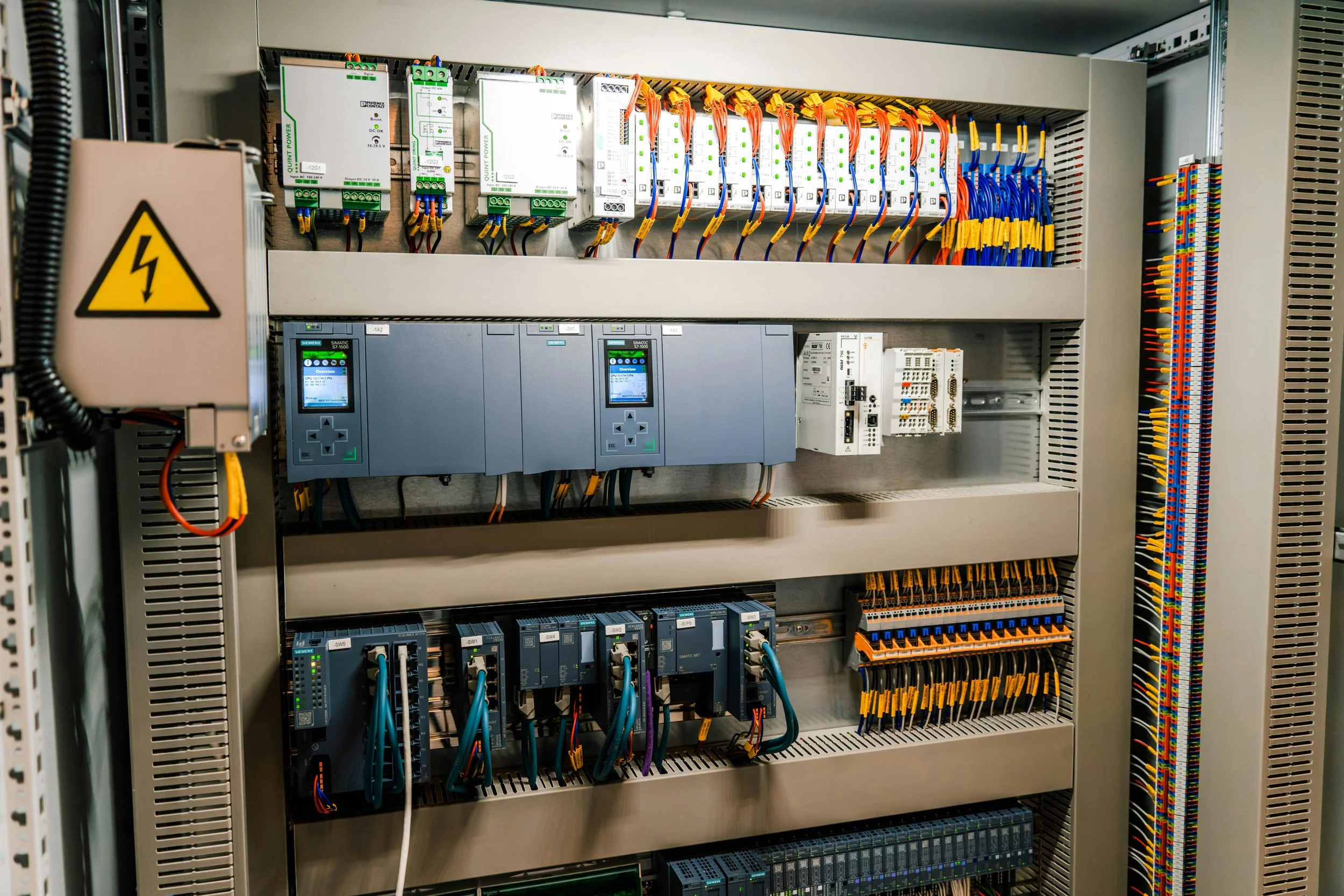
Engineering & Controls
Uptime is won and lost in the beginning. MMS engineers SUCCESS inTO your APPLICATION
PLC programming, HMI development, robotics integration, controls retrofits, mechanical engineering, tooling design, and facilities layout and planning. Engineering services built around the realities of running production — designed by people who came up running it.
WHAT'S INCLUDED
What MMS owns in an engineering & controls program.
From PLC programming to plant-wide controls modernization, MMS supports the engineering work that keeps automated production running.
PLC Programming & Upgrades
Allen-Bradley, Siemens, Mitsubishi. New builds, ground-up rewrites, and migrations off legacy controllers — without losing the hard-earned floor logic.
HMI & SCADA Development
Operator-first interface design. FactoryTalk, Ignition, WinCC. Built so the people running the line can run the line — not decipher it.
Robotics Integration
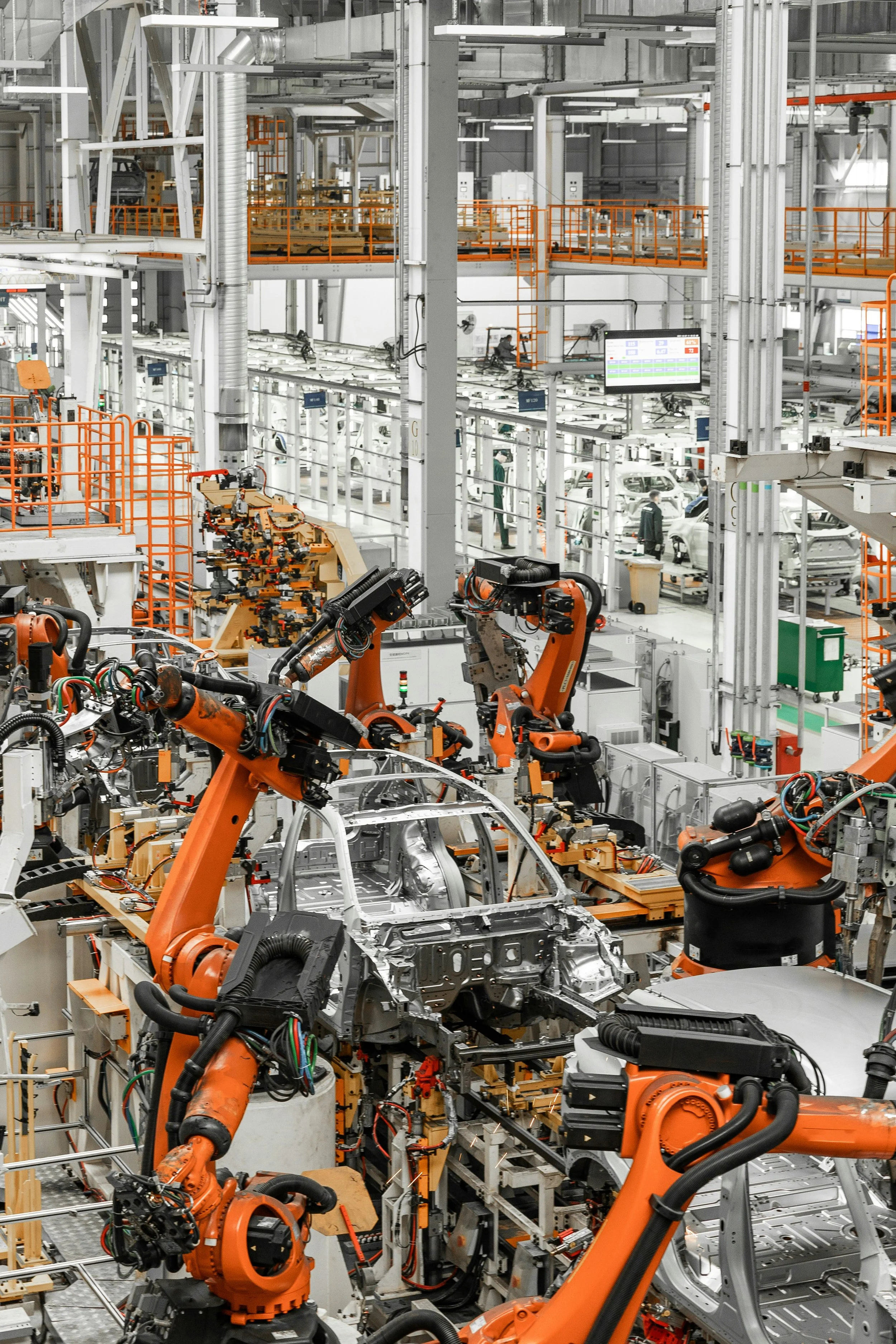
Fanuc, ABB, KUKA, Yaskawa. Cell design, end-of-arm tooling, vision integration, safety circuit design, and on-floor commissioning.
Controls Retrofits & Modernization
Replace obsolete controllers, drives, and I/O without ripping out what works. Phased migrations that keep production running.
WHY MANUFACTURERS STAY WITH MMS
Built for industrial reality.
Three things that show up on the floor, in the data, and on the P&L.
Operator-Led
MMS is built and led by people who have walked the floor — military, manufacturing, engineering, and heavy industrial operators. The leadership making decisions about your program has lived your problems. That credibility shows up in scopes that are realistic, deliverables that work on the floor, and execution that respects production constraints.
Employee-Owned
MMS is employee-owned. Thirty percent of the company is held by our workforce, which means every technician, planner, and engineer on your site has direct stake in the outcome. Ownership shows up in safety discipline, in PM completion rates, and in how problems get escalated.
Operating Model
Every site MMS manages follows the same operating rhythm — daily production alignment meetings, weekly performance reporting, monthly reliability reviews, quarterly business reviews. Maintenance work is visible, measurable, and accountable. Not a black box. Not a labor invoice.
Engineering Disciplines that fit your operation.
Mechanical Engineering
- Tooling, machine, assembly and component design
- Failure effects analysis to ensure reliability
Controls Engineering
- Electrical system design and troubleshooting
- Specialists in Allen Bradley, Siemens, FANUC and other control systems
- PLC deployment, specification, and troubleshooting
- Custom controller design, build, and installation
Safety Engineering
- System, asset, and facility risk assessments
- Safety retrofits
- Machine guarding
- Safety PLC installation and troubleshooting
HOW WE DELIVER
Engineering scoped for the floor.
Every project starts with a site walk. Our engineers stand at the application, talk to the operators, and read the actual logic before they write a line of replacement code or engineer an application. Scope built from what's running — not what was drawn five years ago.
Commissioning happens in phases. We bring in a parallel system, test it against the live one, then switch over during planned downtime. Daily progress reports during active work. Pre-cutover training so operators run the new HMI before go-live. No surprises in startup.
The best upgrade is the one production barely notices.
Engineering & Controls customers MMS supports





INDUSTRIES WE SUPPORT
Industries where controls work pays back fastest.
Plants running automated cells, high-mix lines, and complex changeovers are where engineering and controls investment shows up in throughput and quality numbers.




COMMON QUESTIONS
Engineering & controls — questions buyers ask.
-
MMS engineers across Allen-Bradley (ControlLogix, CompactLogix, MicroLogix), Siemens (S7, TIA Portal), Mitsubishi, and legacy platforms still running on plant floors. HMI/SCADA work spans FactoryTalk, Ignition, WinCC, and Wonderware. Robotics integration covers Fanuc, ABB, KUKA, and Yaskawa.
-
SAMPLE:
No, but MMS minimizes downtime by proving controls retrofits in a trial environment before deploying them to your assets. -
Yes. Most engagements include knowledge transfer to internal maintenance and engineering staff. MMS engineers document every change, train your team on the new logic and HMI, and leave behind a system your people can maintain — not a black box that forces ongoing dependence.
-
Site walk and scoping: 1–2 weeks. Engineering and parallel build: 4–12 weeks, depending on complexity. Operator training: 1–2 weeks before cutover. Commissioning and cutover: scheduled around production downtime. Post-cutover support: 30–90 days standard, longer on request.
-
Every controls project closes with full documentation: updated electrical drawings, PLC program with annotated logic, HMI screen documentation, network architecture, and an operator/maintainer reference guide. Documentation flows into the customer's CMMS and maintenance records.
Wherever your operation is right now,
there's a road to reliability.
Schedule a Maintenance Program Review
For companies evaluating contract maintenance.
Get Emergency Field Support
For companies with an active equipment issue.
Request a Reliability Assessment
For companies ready to build predictive programs.
Talk to a Service Partnerships Leader
For capital projects, outages, or staffing scale.