


Machine Health Monitoring · MMS INSIGHT
The condition of every critical asset, on demand.
Unlimited sensors. Continuous condition data. Alerts that reach the right person before the failure affects production. Always-on visibility scoped to the assets where downtime actually costs you.
WHAT'S INCLUDED
What MMS owns in a monitoring program.
From sensor placement to alert routing, MMS deploys its proprietary system, Insight, and executes continuous monitoring that detects failures between scheduled inspections.
Sensor Deployment
We provide services for all different kinds of sensors, some of which include: wireless triaxial vibration, temperature, ultrasonic, and motor circuit sensors. Placed by failure mode and asset criticality — not by floor coverage.
Platform & Infrastructure
Gateways, cellular, and data integration into your CMMS. Platform-agnostic across Augury, Fluke, Emerson, KCF, and customer-existing systems.
Alert Triage & Routing
Severity-tiered notifications. Warning-level queued for review, alarm-level routed to reliability engineer, critical-level paged to on-call leadership. Configured at setup.
Dashboards & Reporting
Asset health views, criticality-ranked KPIs, monthly executive summaries. Reports built for plant leadership, not for the sensor vendor.
WHY MANUFACTURERS STAY WITH MMS
Built for industrial reality.
Three things that show up on the floor, in the data, and on the P&L.
Operator-Led
MMS is built and led by people who have walked the floor — military, manufacturing, engineering, and heavy industrial operators. The leadership making decisions about your program has lived your problems. That credibility shows up in scopes that are realistic, deliverables that work on the floor, and execution that respects production constraints.
Employee-Owned
MMS is employee-owned. Thirty percent of the company is held by our workforce, which means every technician, planner, and engineer on your site has direct stake in the outcome. Ownership shows up in safety discipline, in PM completion rates, and in how problems get escalated.
Operating Model
Every site MMS manages follows the same operating rhythm — daily production alignment meetings, weekly performance reporting, monthly reliability reviews, quarterly business reviews. Maintenance work is visible, measurable, and accountable. Not a black box. Not a labor invoice.
COMPARE PROGRAMS
Pick the program that fits your operation.
Managed Maintenance
A fully managed program where MMS owns the maintenance scope end to end — workforce, leadership, planning, execution, reporting, and reliability improvement.
Facilities that want a single accountable partner and predictable uptime as a contract outcome.
A.M.P - Technical Workforce
MMS provides skilled multi-craft technicians, electricians, and mechanics — you retain maintenance strategy and program ownership.
Operations that want capacity without overhead, but keep their own maintenance leadership in place.
Project Support
Skilled crews and project oversight deployed for capital projects, outages, and turnarounds.
Operations that need scale and craft for a defined window without expanding internal headcount.
| What's included | Managed Maintenance | Technical Workforce | Project Support |
|---|---|---|---|
| Multi-craft technicians | ✓ | ✓ | ✓ |
| Safety discipline | ✓ | ✓ | ✓ |
| Recruiting & retention | ✓ | ✓ | — |
| Technical training | ✓ | ✓ | — |
| Planning & scheduling | ✓ | ✓ | — |
| Technical leadership | ✓ | ✓ | — |
| Maintenance ownership | ✓ | — | — |
| Operating model rhythm | ✓ | — | — |
| Machine health monitoring | ✓ | — | — |
| CMMS integration | ✓ | — | — |
| MRO asset management | ✓ | — | — |
HOW WE DELIVER
Monitoring is scoped to what actually hurts.
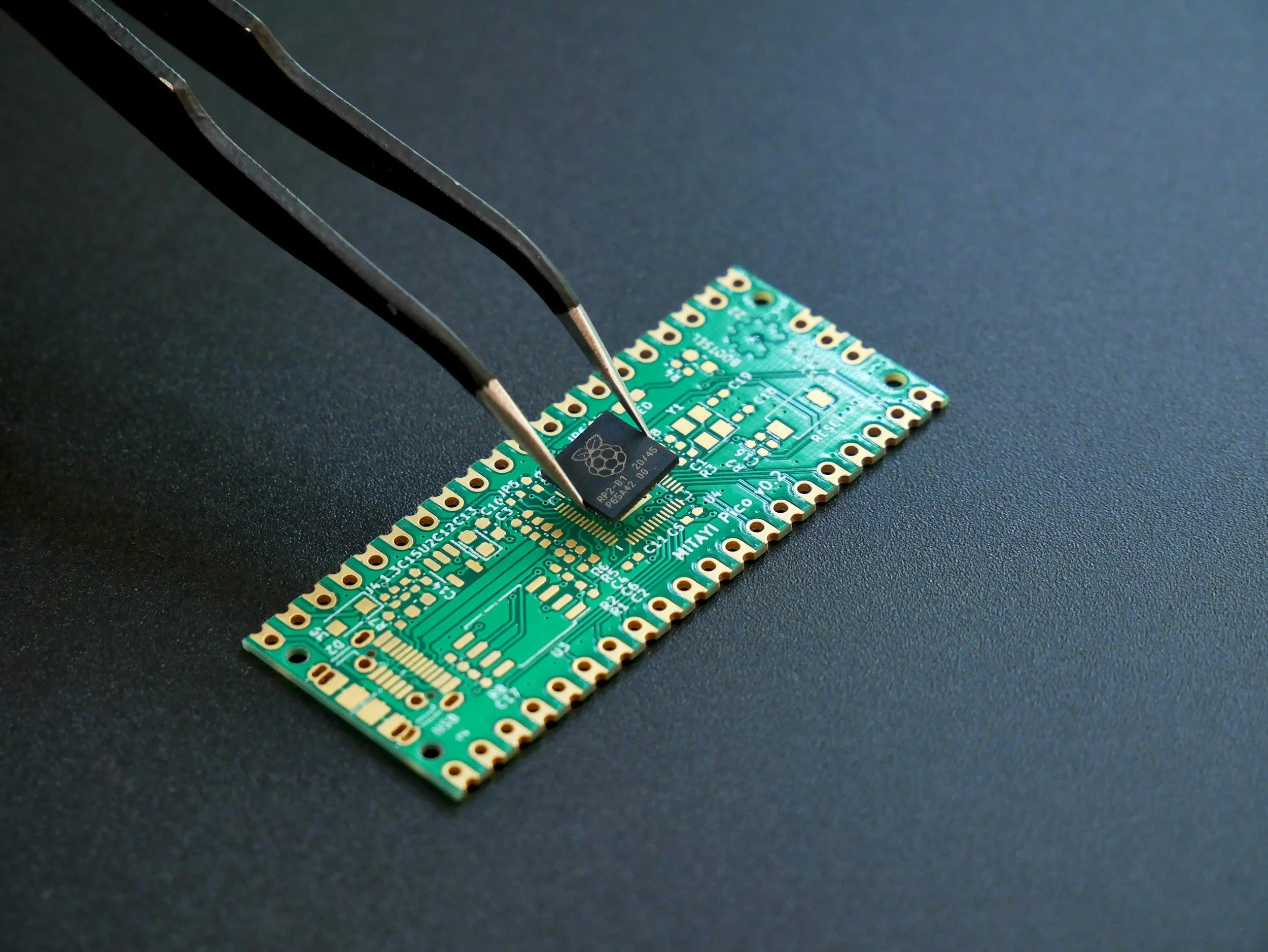
Most monitoring programs fail by covering too much. Sensors get deployed on assets that don't matter, alarms get ignored, and the team learns to mute the dashboard. MMS scopes monitoring to the assets where downtime cost actually justifies continuous coverage — and routes alarms to a person who's accountable for action.
Sensor placement walk before deployment. Alarm thresholds set from baseline data, not vendor defaults. Monthly review of every active alarm with closure tracking. Quarterly scope review to add or retire monitored points based on what's actually been useful.
A dashboard nobody trusts is worse than no dashboard at all.
MONITORING PROGRAM CUSTOMERS MMS SUPPORTS



INDUSTRIES WE SUPPORT
Industries where continuous monitoring earns its keep.
Always-on production, high asset criticality, and expensive failure modes are the conditions where machine health monitoring delivers the strongest payback.



COMMON QUESTIONS
Machine health monitoring — questions buyers ask.
-
Predictive maintenance includes any data-driven failure prediction — including monthly walk-around vibration routes. Machine health monitoring is the always-on subset: wireless sensors continuously streaming condition data from critical assets, with alerts when patterns shift. Same goal, faster signal.
-
Triaxial vibration sensors at bearing housings, temperature sensors at critical thermal points, ultrasonic sensors for steam traps and air leaks, and current sensors on motor circuits. Sensor placement is asset-specific — we deploy based on failure modes, not floor coverage.
-
Alerts route by severity. Warning-level: queued for next reliability review. Alarm-level: immediate notification to plant reliability engineer with recommended action. Critical-level: page-out to on-call maintenance leadership with mobilization protocol. Routing is configured at setup, not at the alarm event.
-
We deploy on whatever platform fits the asset and the customer environment — Augury, Fluke 3563, Emerson AMS, KCF, AssetWatch, or customer-existing systems. We're platform-agnostic so the recommendation matches the problem.
-
Two components: sensor hardware (one-time, per asset) and monitoring subscription (monthly, per asset). Pricing scales with the number of points monitored, not the number of assets. Most programs are scoped to 20–40% of the asset base — the critical assets where downtime cost justifies continuous coverage.
Wherever your operation is right now,
there's a road to reliability.
Schedule a Maintenance Program Review
For companies evaluating contract maintenance.
Get Emergency Field Support
For companies with an active equipment issue.
Request a Reliability Assessment
For companies ready to build predictive programs.
Talk to a Service Partnerships Leader
For capital projects, outages, or staffing scale.