SOLUTION — STRENGTHEN SAFETY
Training is not safety.
Annual compliance training, posters, and meetings don't move TRIR. Safety outcomes come from operating discipline — how the work gets planned, who has accountability, and what happens when something looks wrong. MMS embeds safety into the operating model on every site we manage.
TRUSTED BY MANUFACTURERS WHO PUT SAFETY INTO THE OPERATING RHYTHM



SOUND FAMILIAR?
If your safety scorecard looks like this, you're not alone.
TRIR climbing despite annual training and signage everywhere.
Near-misses going unreported because nobody trusts the system.
Maintenance teams cutting corners under production pressure.
Contractor incidents counting against your plant numbers.
Insurance premiums climbing at every renewal cycle.
Safety meetings producing checkboxes — not behavior change.
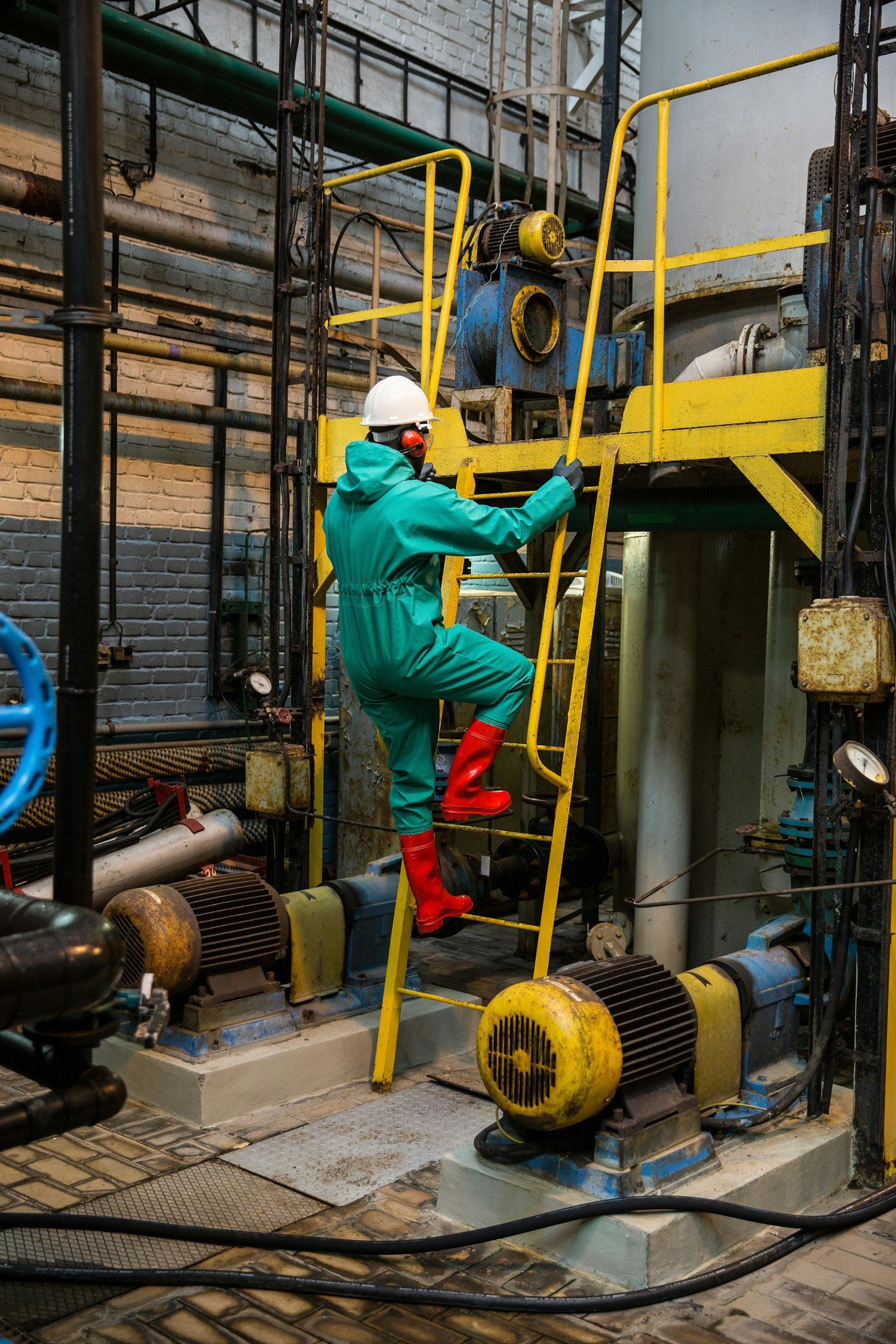
WHAT’S ACTUALLY HAPPENING
Compliance is a number. Safety is an operating system.
When safety leaders tell us they have a safety problem, the surface symptom is always TRIR or near-misses. The diagnosis usually focuses on "more training," "better signage," or "behavior-based programs."
But the underlying cause is rarely awareness. It's how the work gets planned, executed, and reviewed.
Plants with safety problems usually have one of three things broken: planning that creates rushed work, ownership that disappears at shift change, or learning systems that never close on a near-miss.
THAT’S WHAT WE FIX.
HOW MMS FIXES IT
Three services that solve it.
Industrial Maintenance
A managed program that owns planning, scheduling, shift handoff, and incident learning. The operating discipline that prevents rushed work and closes the loop on every near-miss.
Explore →Training & Development
RMIC-accredited credentialing and job-specific safety training tied to actual work scope — not generic compliance modules. Trained people don't learn safety on the job.
Explore →Reliability & Predictive
Root cause analysis discipline applied to every incident and near-miss. Findings flow into PM updates, training plans, and capital recommendations — the learning system that prevents the next one.
Explore →COMMON QUESTIONS
Safety — questions buyers ask.
-
Training and compliance are baseline. They don't move TRIR on their own because they don't change the conditions that produce incidents — planning gaps, ownership confusion at shift change, and incomplete root cause on near-misses. Plants with strong compliance often have stagnant safety metrics because the operating system around the training is broken.
-
Safety compliance measures whether required training was delivered, signage is posted, and procedures are documented. Safety performance measures whether people are actually getting hurt less. A plant can have 100% compliance and an unchanged TRIR simultaneously — the most common pattern in industrial safety. MMS rebuilds programs to improve both, with performance as the outcome metric.
-
Yes. On every Managed Maintenance engagement, MMS owns safety performance as a contract outcome — TRIR, near-miss reporting, incident investigation, and continuous improvement. We don't deflect to the customer's safety team. Our employees are accountable for our safety record, and our contracts are written that way.
INDUSTRIES WHERE THIS HITS HARDEST
Where safety performance is the operating license.
High-risk operating environments where insurance, OEM audits, regulator attention, or customer requirements make safety performance a condition of staying in business.


Wherever your operation is right now,
there's a road to reliability.
Schedule a Maintenance Program Review
For companies evaluating contract maintenance.
Get Emergency Field Support
For companies with an active equipment issue.
Request a Reliability Assessment
For companies ready to build predictive programs.
Talk to a Service Partnerships Leader
For capital projects, outages, or staffing scale.